Women’s Alliance for Peace: Action and resilience in times of crisis
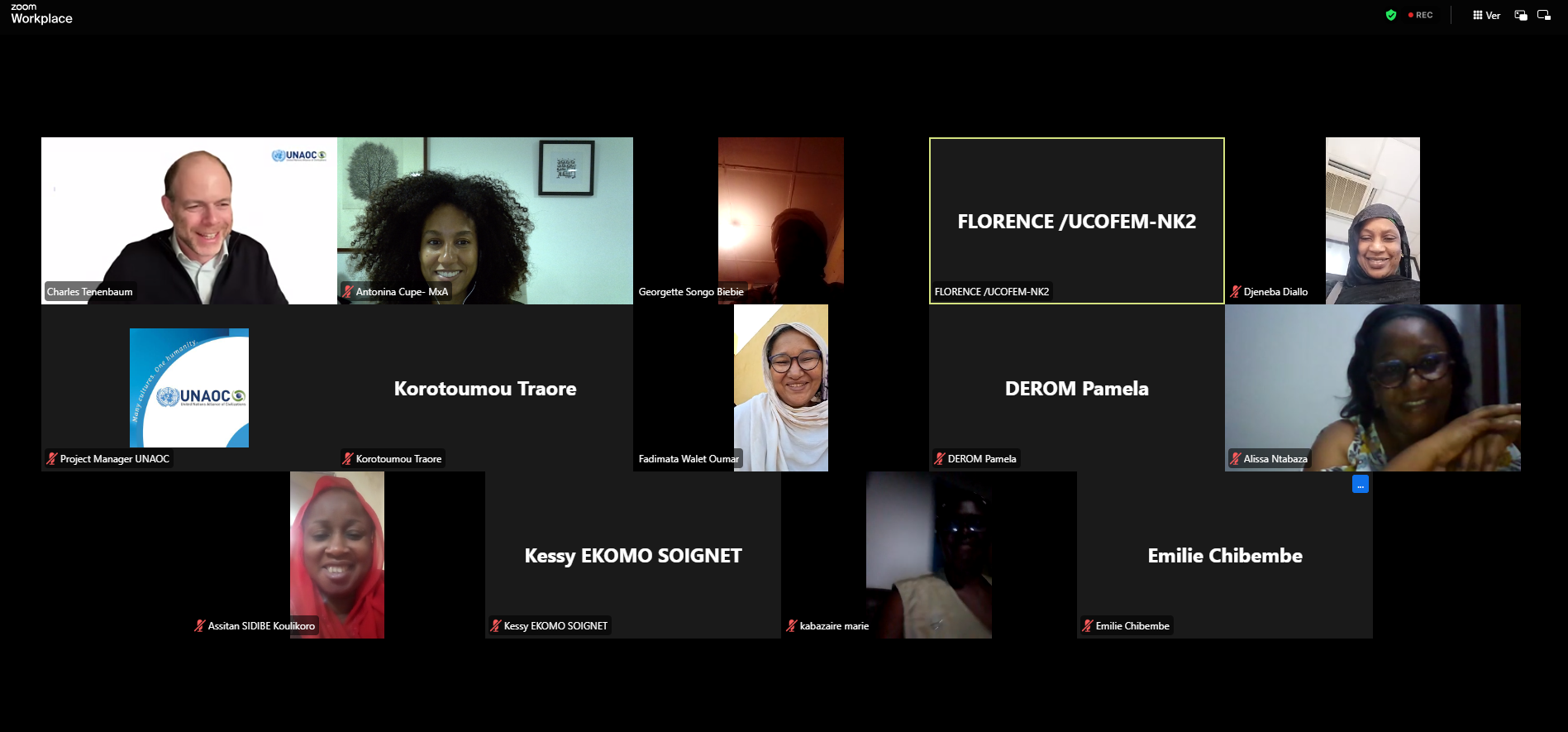
Madrid, June 3, 2026 — On May 26, 2026, the Women’s Alliance for Peace—an initiative of the foundation in partnership with UNAOC—and the Coalition of African Women Mediators for Peace (CFAMP) held their monthly webinar. Through testimonials about the crisis and institutional mapping, the session highlighted the urgent need to strengthen women’s role in peace processes.
Connected via videoconference from Kinshasa, Bamako, Bangui, and other capitals across the continent, women engaged in mediation and peacebuilding shared compelling accounts of their working conditions, while working to better embed their networks within Africa’s institutional frameworks for conflict prevention.
Alarming conditions on the ground
Participants in Bamako described a near-total blockade of the Malian capital: supply convoys set ablaze, travel impossible for women’s organizations, and training materials blocked outside the city. Despite this, 92 displaced women from the Souba site in Koulikoro had nevertheless received training in sewing and knitting, illustrating the network’s resilience in the face of adversity.
From Kinshasa, CFAMP representatives announced the suspension of a regional conference on peace agreements in the Great Lakes region due to the Ebola epidemic and border closures. This conference was intended to inform the recommendations to be submitted to the United Nations General Assembly in September.
In the Central African Republic, CFAMP-RCA is finalizing its action plan as the country faces a hostage crisis that has remained unresolved since December and low representation of women in institutions: five women out of thirty government members, with a gender parity law that has gone unenforced.
Mapping Institutional Mechanisms to Better Engage with Them
The session included a thematic segment on African mechanisms for conflict prevention and mediation: the African Union (Peace and Security Council, Panel of the Wise, Mediation Support Unit), regional organizations such as ECOWAS, ECCAS, IGAD, and SADC, and multilateral partners. A lineup of prominent women mediators—Ellen Johnson-Sirleaf, Catherine Samba Panza, Graça Machel, Betty Bigombe, and Joyce Banda—highlighted women’s historic contributions to these processes.
The strategic challenge is twofold: to identify permanent institutional partners capable of providing funding, training, and legitimacy to initiatives led by women mediators, and to define how the CFAMP can position itself in this arena in a sustainable manner.
The Women’s Alliance for Peace aims to strengthen women’s participation in all mediation and peacebuilding processes on the African continent.