Training, leadership and African talent at the heart of the debate on university cooperation at Bridge to Africa
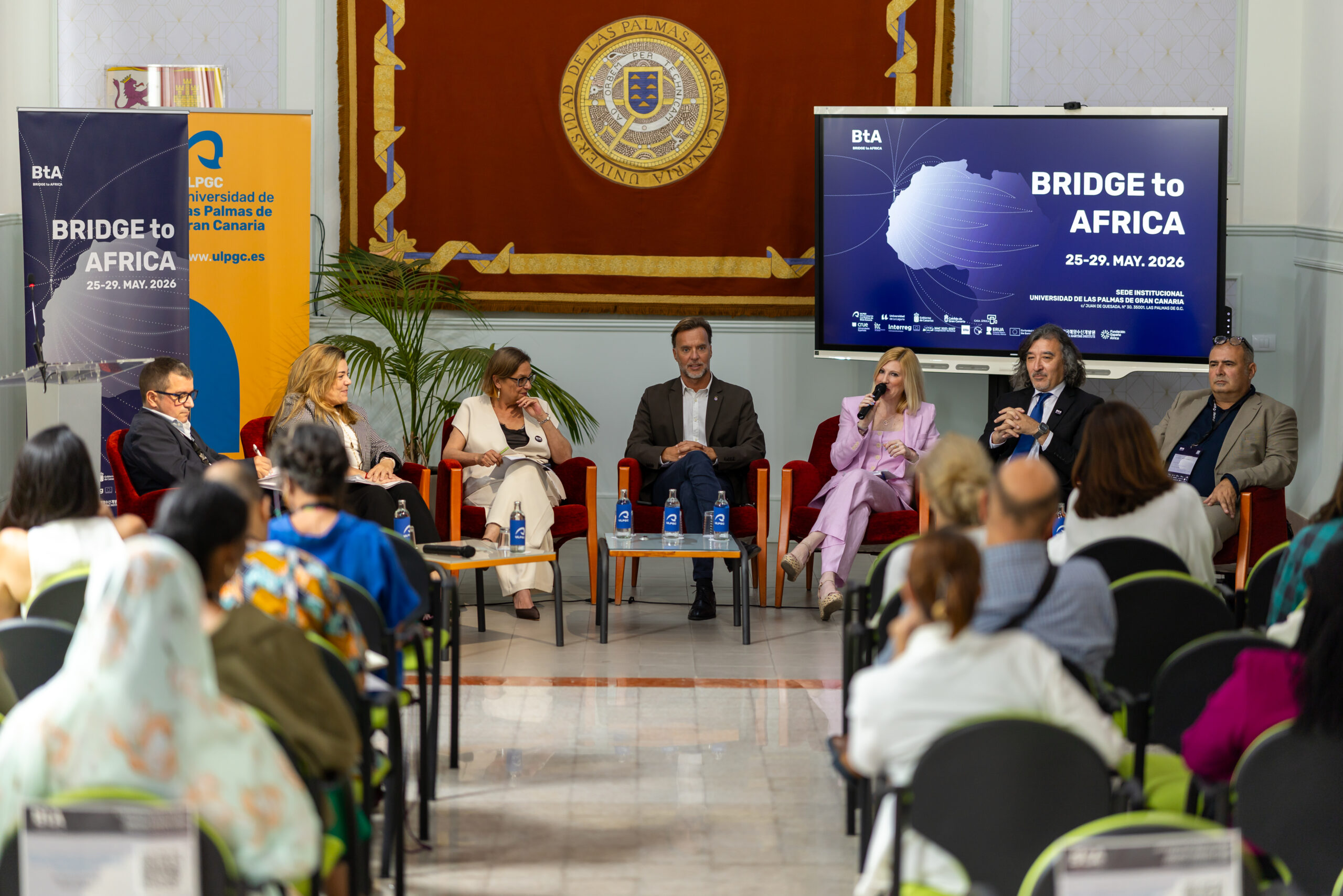
Thursday, May 28, 2026 – The second edition of Bridge to Africa, an initiative led by the public universities of the Canary Islands to create an International Academic Hub between West Africa and the Canary Islands, has once again established itself as a key platform for institutional, scientific and business dialogue between the two continents. Over the course of five days, the event brings together institutional leaders, researchers, international experts, companies and organizations to reflect on the main challenges and opportunities for cooperation in areas such as the energy transition, health, education, sustainable economy and African geopolitics.
The programme features keynote lectures, institutional and business roundtables, sessions led by technical experts, and the 4th International Congress of Young Researchers on Africa, consolidating Bridge to Africa as a dynamic ecosystem of shared knowledge that reinforces the strategic role of the Canary Islands as a bridge between Europe and Africa.
Juan Algar, Director General of the foundation, took part on Tuesday in the institutional sessions, where he presented the work the organization carries out with women across the African continent. He also contributed to a special segment that Onda Cero dedicated to the event, bringing the foundation’s transformative approach to a wider audience.
On Wednesday, it was the turn of Beatriz Santacruz, Coordinator of the Education and Health area, who participated in the roundtable “Spain and the Canary Islands: Current Academic Initiatives for Cooperation with Africa”. In her remarks, Santacruz presented the results of the Learn Africa Canarias programme and highlighted its ability to articulate three dimensions that often remain disconnected: “the programme has managed to connect training, employability and international cooperation in a highly practical way, aligned with the real needs of African and Canary Islands labour markets,” she noted.
Beyond the programme’s concrete results, Santacruz used her intervention to advocate for a deeper shift in how university cooperation with Africa is understood. “One of the key lessons learned over the years is that it can no longer be seen solely as a one-way transfer of knowledge. Today, we speak of horizontal partnerships, international talent networks and the co-creation of knowledge,” she stated. In this same vein, she emphasized that the African students participating in these programmes are not merely recipients of opportunities, but community leaders, researchers, entrepreneurs and agents of change who significantly enrich host universities and societies, while also generating a meaningful impact in their communities of origin.
The foundation’s participation in Bridge to Africa reaffirms its commitment to building a model of cooperation that places African women at the centre of sustainable development, innovation and social transformation in their own territories.