The Women for Peace Alliance marks the 25th anniversary of Resolution 1325 with an online event on mediation and women’s leadership
Madrid, November 3rd, 2025— Twenty-five years ago, United Nations Security Council Resolution 1325 recognized for the first time that women’s leadership is essential to achieving a just and lasting peace. Since then, the Women, Peace and Security agenda has inspired numerous resolutions, reports, and roundtables around the world. Yet the reality remains alarming: nine out of ten peace processes still lack women negotiators.
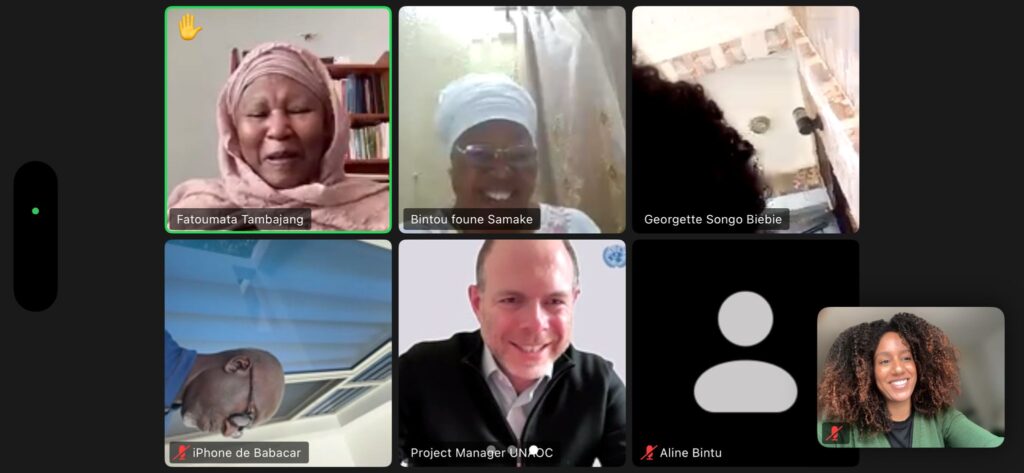
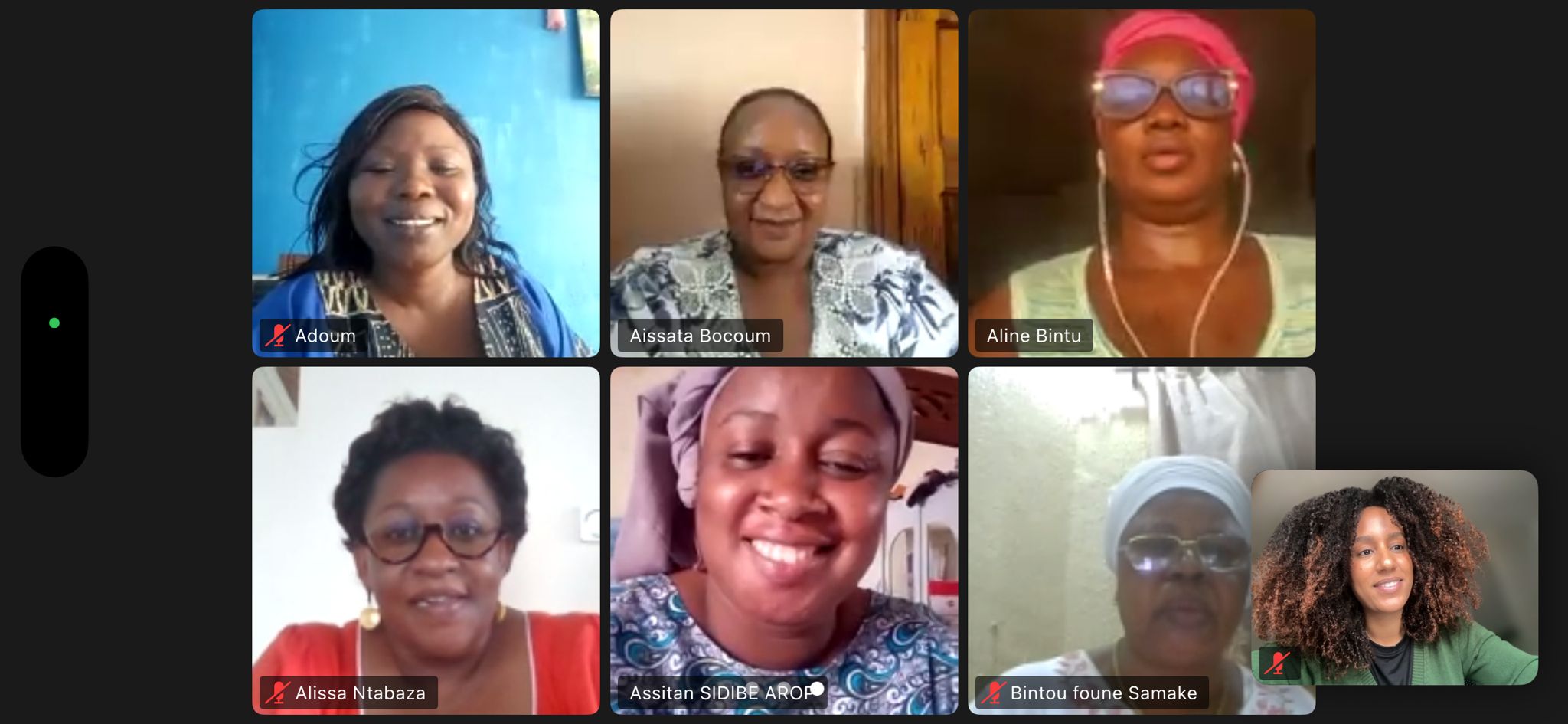
To mark this anniversary, the Women for Peace Alliance, an initiative of the Women for Africa Foundation in collaboration with UNAOC, held a virtual event last Friday under the theme “Strengthening the role of women in peace mediation”. The Alliance promotes the crucial role of African women as peacemakers, negotiators, and mediators, and the event became a space for reflection and dialogue on both progress achieved and the challenges that remain.
The session opened with welcoming remarks from project coordinators Charles Tenembaum and Antonina Cupe, followed by the keynote address from Fatoumata Jallow Tambajang, former Vice President of the Republic of The Gambia and one of the African leaders with whom the Foundation closely collaborates. “An anniversary such as this should be a moment of reflection: a time to look back at what we have achieved since October 2000 and to look ahead, as we seek to formulate concrete solutions that will ensure that insecurity in the lives of women, and violence against women, become things of the past,” said Tambajang. Regarding peacebuilding, she added: “we must look at peace and security beyond the mere absence of war or violence. We must see it as the presence of gender equality, in policies, programs, and investments.”
Among the speakers was Caddy Adzuba, a Congolese journalist, lawyer, and activist, member of the Alliance, and internationally recognized for her tireless advocacy for women’s and children’s rights in the Democratic Republic of the Congo. During her intervention, Adzuba emphasized the importance of women’s participation in decision-making spaces: “If you’re not on the table, you’re on the menu.” She also reminded participants that African women’s leadership long predates any UN resolution: “Let us remember that African women did not wait for a resolution to fight. They have always been pillars of their communities, defenders of life, and builders of peace. Strengthening peace does not only mean disarming conflicts, but also defending dignity, justice, and inclusion. Security is also measured in terms of respect, equality, and participation”.
Mireille Affaa Midzie, Senior Gender Affairs Officer at MONUSCO (the United Nations Mission in the Democratic Republic of the Congo), shared some of the latest initiatives promoted by the Mission in the field of mediation. “Since January—immediately after the M23 took Goma—we began organizing Congolese women from Goma, Bukavu, Beni, Bunia, and Kinshasa to work on drafting an advocacy note. This document was to constitute their proposal for a way out of the crisis (…). In fact, the Minister of Foreign Affairs mentioned that the women had given her their advocacy brief during the signing of the Washington Agreement. However, we are fully aware that (…) the agreement remains very gender-blind, that is, it does not sufficiently incorporate a gender perspective”, explained Midzie, stressing the need to continue advancing the effective integration of gender perspectives in peace processes.
Dr. Georgette Biebie Songo, affectionately known as “Mama Georgette”, also took part in the event. A professor of toxicology and human rights activist in the DRC, she has spent more than two decades working to promote women’s rights. She recalled her participation in the Inter-Congolese Dialogue held in South Africa in 2002, when only 47 of the 360 delegates were women. “When discussions stalled, the women formed a pressure group, blocked the doors, and demanded that no delegate leave the room until an agreement was reached. Their determination forced the resumption of dialogue and ultimately led to the signing of a partial comprehensive agreement, which laid the foundations for political transition in the DRC”.
The event also gave the floor to young women mediators such as Diane Adoum (Central African Republic), Assitane Sidibe (Mali), and Ketsia-Divine Miseya (DRC), who shared their perspectives on the future of mediation on the continent. Their participation highlighted the importance of intergenerational exchange in peacebuilding. As Tambajang reminded the audience: “If older people in every society possess wisdom and experience, then we, as older people, must continue to support new generations through intergenerational dialogue, interaction, guidance, accompaniment, and the creation of opportunities”.
Twenty-five years after Resolution 1325, the voices gathered in this meeting shared a common message: peace will only be possible if it is inclusive — and women’s leadership remains one of the keys to achieving it.