Science by Women launches its 12th edition of research fellowships for African women scientists
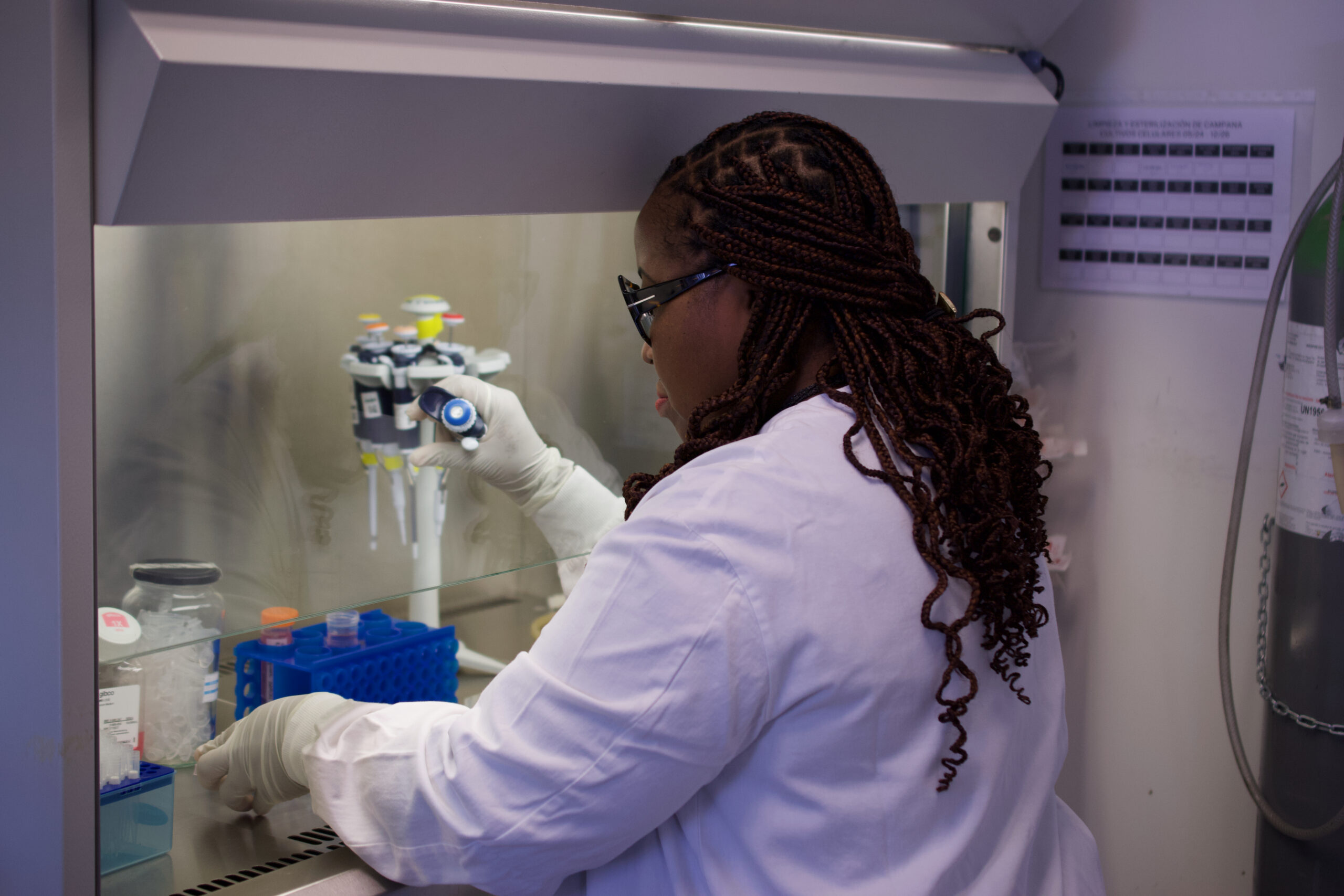
Madrid, May 11th, 2026 –Since the Women for Africa Foundation launched Science by Women in 2014, the programme has supported more than 190 researchers from 38 African countries during their research stays at internationally renowned institutions in Spain. Over the course of eleven editions, these scientists have worked in a wide range of strategic fields, including health, biomedicine, artificial intelligence, sustainability, renewable energy, and astrophysics.
The programme was created with a clear mission: to ensure that African women’s scientific talent is not lost due to a lack of opportunities. Not only has it fulfilled this purpose, but it has gone beyond it by building an international community — the NOWisAfrica network — that fosters collaboration and knowledge transfer far beyond the six months of each research stay.
African scientific talent: a global opportunity that can no longer be overlooked
Africa has one of the youngest populations with the greatest scientific potential in the world, yet access to research infrastructure and international networks remains deeply unequal. According to UNESCO data (2025), in 2018 Sub-Saharan Africa had only 124 researchers per million inhabitants, compared to a global average of more than 1,000. Scientific diplomacy and strategic partnerships between continents are, according to the same organisation, essential tools to reverse this gap.
This gap becomes even more pronounced when gender is taken into account. Although women represent around 30% of science professionals on the African continent, according to UNESCO data in 2025, their presence systematically decreases as they move up the academic hierarchy. This phenomenon is not exclusive to Africa: globally, less than 33% of researchers working in STEM fields are women.
Science with a gender perspective: a matter of justice and effectiveness
Science by Women is not only a research fellowship programme; it is also a direct response to the structural barriers that continue to push women out of STEM careers. A study published in Higher Education and based on the analysis of 400,000 scientists from 38 countries (2024) revealed that women are more likely to leave research than their male counterparts: nearly half of those who begin a research career leave within the first ten years.
For this reason, since its inception, Science by Women has incorporated an explicit gender perspective into its design: it includes work-life balance measures that allow researchers to participate without having to give up their family responsibilities, while also promoting women’s scientific leadership as part of its impact strategy. Without this perspective, the programme would not be what it is today.
More than research stays
Over the years, the programme has expanded its scope to offer much more than research stays. Science by Women promotes training activities, leadership development, science communication, knowledge transfer, and academic writing.
In 2024, the programme also reached the screen with the premiere of the documentary The Science of African Women, directed by Begoña Piña and Pedro Mambrú, which tells the story of its first eight years and is available on the foundation’s YouTube channel.
The institutions participating in the twelfth edition
The 12th edition of Science by Women includes the participation of six internationally renowned Spanish research institutions:
- Institute of Neurosciences (IN – UMH/CSIC) — Neurosciences, Alicante
- Barcelona Institute of Materials Science (ICMAB – CSIC) — Materials science, Barcelona
- Canary Islands Oceanographic Platform (PLOCAN) — Oceanography and Marine Technologies, Gran Canaria
- Canary Islands Institute of Astrophysics (IAC) — Astrophysics, La Laguna (Tenerife)
- University Institute for Biomedical and Health Research (iUIBS – ULPGC) — Biomedicine and Health, Las Palmas de Gran Canaria
These institutions join a network that, over the course of eleven editions, has involved 33 Spanish research centres , demonstrating that the Spanish scientific system’s interest in attracting African women’s talent is not temporary, but rather a sustained strategic commitment over time.
Application deadline: 30 June 2026.
More information at: Science by Women Call for Applications